
Running a Small Business
After-hours answering service: what small businesses need to know
· 7 min read
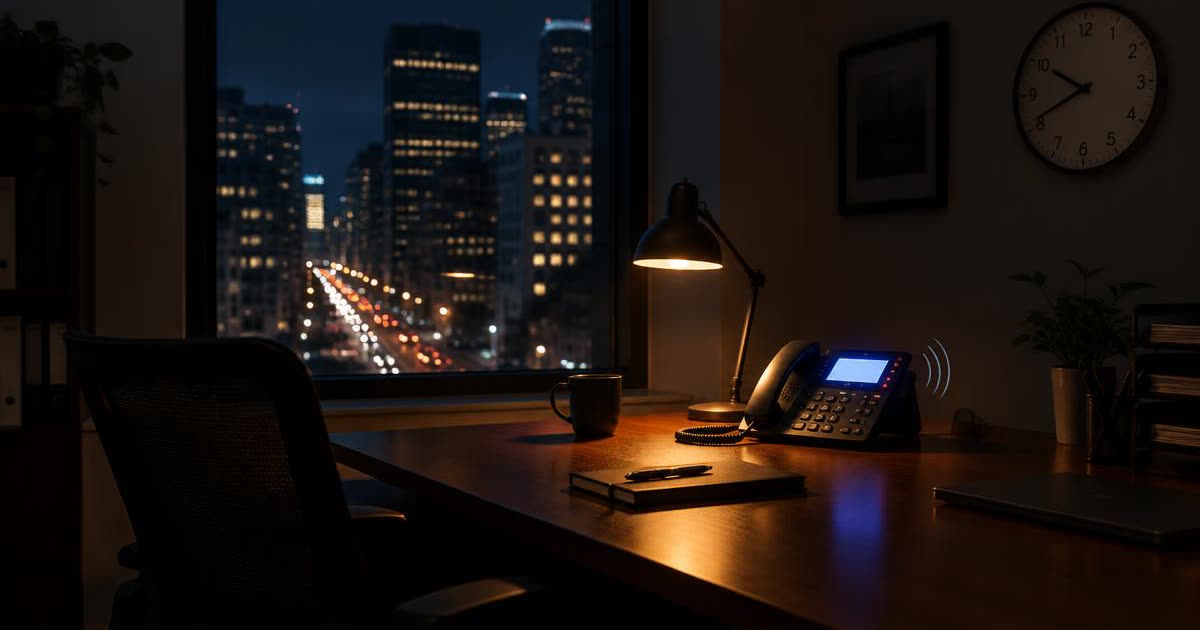
You lock up, drive home and finally sit down for dinner. Meanwhile, your business phone keeps ringing. Someone wants to book for next week. Someone has an emergency. Someone just wants to know if you're open Saturday. Each of those calls goes to voicemail, and plenty of those callers won't leave a message.
For many small businesses, evenings and weekends are when customers finally have time to call. An after-hours answering service makes sure those calls still turn into bookings.
Who needs an after-hours answering service?
Almost any business where a missed call means a missed customer, but especially:
- Trades and home services. Plumbers, electricians, HVAC and roofers get emergency calls at night, and those jobs often pay the most.
- Clinics and health practices. Patients book when they're off work, often early morning or evening.
- Salons, spas and studios. Clients think about booking in the evening, when you're closed.
- Any business run by the owner. If you're the one doing the work all day, every evening becomes callback time unless something else picks up.
What happens to after-hours calls right now
When a call goes to voicemail, a few things can happen. Some callers leave a message and wait. Many hang up and call the next business on their list. Some try again tomorrow, if they remember. You only ever hear from the first group. Here's a quick way to estimate what the rest are worth:
For example: 12 after-hours calls a week, a third of them new customers, at $250 each, is $1,000 a week, or around $50,000 a year. Your phone provider or call log can show you how many calls come in when you're closed.
Your after-hours options compared
| Option | How it works | Where it falls down |
|---|---|---|
| Voicemail | Callers leave a message and you call back the next day. | Many people won't leave a message, and next-day callbacks often find they've already booked elsewhere. |
| Forward to your mobile | You answer business calls at home. | You're never off the clock, and calls still get missed when you're asleep or busy. |
| Traditional call center | Live operators answer and take messages. | Usually billed per minute or per call, generally can't book into your calendar, and operators don't know your business well. |
| AI receptionist | Answers every call, handles questions, books appointments and flags emergencies. | Needs a short setup so it knows your services, prices, hours and rules. |
How after-hours answering services charge
There are three common pricing models. Ask about each before you sign up:
- Per minute. You pay for the time operators spend on your calls. Cheap in quiet months, but bills can jump when you're busy.
- Per call. A set fee for each call, which can add up quickly with spam and wrong numbers.
- Flat monthly. One price however many calls you get. The easiest to budget for, and the most common model for AI receptionists.
What to look for
- Truly 24/7. Including weekends and public holidays, not just a few extra hours.
- Books, not just takes messages. A booked appointment is worth far more than a note to call back.
- Knows your business. Your services, prices, service area and the questions customers ask.
- Flags real emergencies. And knows what can wait until morning, so you're not woken for a quote.
- Instant summaries. A clear text or email for each call, so you start the day knowing who called.
- Keeps your number. Set up with call forwarding, without changing your number.
- Sounds natural. Callers should feel they reached a real business, not a phone menu.
- Easy to cancel. Avoid long contracts until you know it works for you.
How to set up after-hours answering
- Decide when it should answer. Only after hours, whenever you don't pick up, or all the time. Most phone providers let you forward calls only when you don't answer, or on a schedule.
- Share what callers usually ask. Hours, prices, services, service area and your booking rules.
- Agree what counts as urgent. And who gets told, and how, when an urgent call comes in.
- Turn on call forwarding. With No Dramas, this takes about 30 seconds and we set everything else up for you.
- Test it. Call your own number after hours and hear what your customers will hear.
You can try it right now: talk to our AI receptionist on the home page.
Guides for your type of business
After-hours calls look different in every industry. These guides go into more detail:
- Plumbing answering service: burst pipes, leaks and weekend emergencies.
- Answering service for electricians: power outages and safety questions.
- HVAC answering service: no-heat and no-cool calls in peak season.
- Roofing answering service: storm rushes and active leaks.
- Chiropractic answering service: new-patient bookings before and after clinic hours.
Common questions
Is an AI receptionist as good as a live operator?
For most small businesses, it does more. Because it's trained on your business, it can answer real questions and book appointments, not just take a message. It can also take several calls at once, so callers aren't left on hold.
Will callers know it's AI?
It's built to sound warm and natural. The best way to judge is to try the live demo and hear it for yourself.
What does No Dramas cost?
Try it free for 14 days, then $497/mo. Cancel with a click. That includes the AI receptionist and automated review requests, with setup done for you.
Stop sending after-hours customers to voicemail.
Try it free for 14 days, then $497/mo. Cancel with a click.