
Trades & Home Services
HVAC answering service: how to stop losing jobs in your busiest weeks
· 7 min read
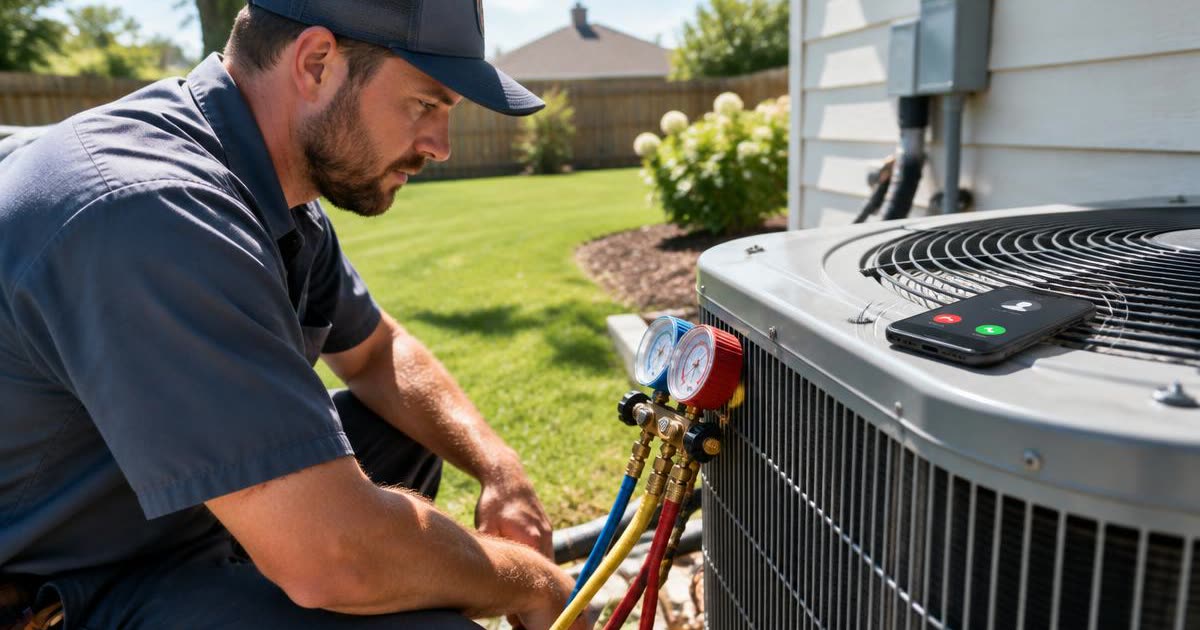
The first real heatwave of the summer hits. By 10am your phone hasn't stopped ringing, and you're on a rooftop unit with gauges hooked up and sweat in your eyes. Every call you can't take is a homeowner with no air conditioning, and they're already dialing the next company.
HVAC is one of the few trades where demand spikes overnight. The weeks you get the most calls are exactly the weeks you have the least time to answer them.
Why HVAC businesses miss calls
- Call volume is seasonal and sudden. A heatwave or cold snap can double your calls in a day. No office team is sized for the peak.
- Your techs are on roofs, in attics and in crawlspaces. Nobody can safely answer a phone there.
- No heat and no cool are urgent. A family with a baby or an elderly parent won't wait until tomorrow for a callback.
- After-hours calls are often the best-paying. Missing them means missing emergency rates and new customers who may stay with you for years.
- Maintenance bookings get pushed aside. Tune-ups and service agreements keep you busy in the quiet months, but only if someone takes the call.
What a missed call costs an HVAC company
HVAC customers can be worth a lot over time: a repair today can lead to a maintenance plan and, years later, a system replacement. Here's a simple way to estimate what you're losing:
For example: in a busy summer week you miss 15 calls. If 5 were new repair jobs at an average of $450, that's $2,250 in one week. And one of those customers might have needed a new system next year.
How your answering options compare
| Option | How it works | Where it falls down |
|---|---|---|
| Voicemail | Callers leave a message and wait. | In a heatwave, nobody waits. They call the next company in their search results. |
| On-call tech rotation | A tech carries the after-hours phone. | Wakes your team for non-urgent calls, and calls still get missed while they're on a job. |
| Office dispatcher | Someone in the office answers and schedules. | Can only take one call at a time, so callers hit voicemail during spikes. |
| Traditional answering service | Call center operators take messages. | Usually messages only, per-minute billing that jumps in busy months, and hold times at peak. |
| AI receptionist | Answers every call at once, triages, books and sends summaries. | Needs a short setup so it knows your services, service area and emergency rules. |
What to look for in an HVAC answering service
- Handles call spikes. It should answer several calls at the same time, so nobody hears a busy tone on the hottest day of the year.
- Asks your triage questions. Is the system completely off? Is anyone at home elderly, unwell or a baby? Any burning smell? Answers decide how urgent the job is.
- Books routine work into your calendar. Tune-ups, quotes and follow-ups should be scheduled, not left as messages.
- Answers common questions. Service area, hours, call-out fees and which brands you service.
- Only escalates real emergencies. Your on-call tech should get woken up for a no-heat call in a freeze, not for a quote request.
- Sends instant summaries. Know who called and why, seconds after they hang up.
- Keeps your number. No changes to your trucks, website or Google listing.
- Flat, predictable pricing. Your busiest month shouldn't bring your biggest phone bill.
What a call sounds like
It's 8:30pm in July. A homeowner's air conditioning has stopped working.
Receptionist Thanks for calling Summit Heating & Air. How can I help tonight?
Caller Our AC just stopped. The fan's running but it's blowing warm air.
Receptionist I'm sorry, that's no fun in this heat. Is anyone at home elderly, unwell or a young child?
Caller My mom lives with us. She's 82.
Receptionist Thanks for letting me know. I'm marking this as urgent for our on-call technician. Can I get your name, address and the best number to reach you?
Your on-call tech gets a summary in seconds: no cooling, fan running, an elderly person in the home, plus the address and number. They can call back right away and decide whether to go out tonight.
Hear it for yourself: talk to our AI receptionist on the home page.
Reviews win the next heatwave
When an AC breaks, homeowners pick quickly, and star ratings do a lot of the deciding. The best time to ask for a review is when the house is cool again, but that's also when your tech is rushing to the next job.
- Review requests go out automatically after each job, while the customer is still relieved.
- Every review is in one place, from Google, Facebook and other sites.
- Replies are drafted for you by AI, ready to post in one click.
Plenty of HVAC companies also do plumbing. If that's you, our guide to choosing a plumbing answering service covers burst pipes and leak calls.
Common questions from HVAC owners
Can it answer only after hours or when we're busy?
Yes. You can forward calls only when nobody picks up, only after hours, or all the time. It's your choice.
Do I need a new number?
No. You keep your number and set up call forwarding in about 30 seconds.
Can it book maintenance visits in the off season?
Yes. It books tune-ups and service visits into your schedule, which helps keep your techs busy between peaks.
What does it cost?
Try it free for 14 days, then $497/mo. Cancel with a click. Setup is done for you, free.
Catch every call, even in a heatwave.
Try it free for 14 days, then $497/mo. Cancel with a click.